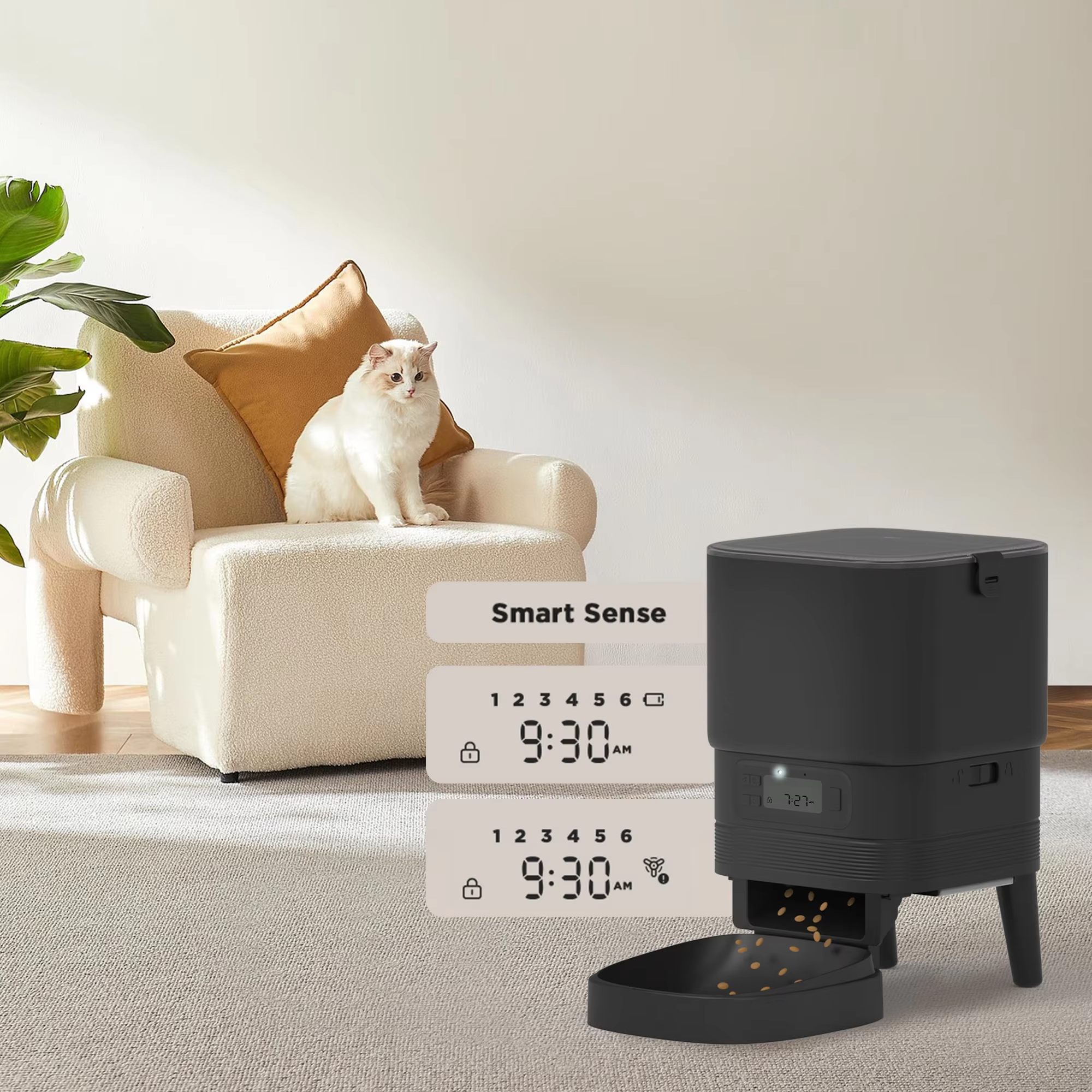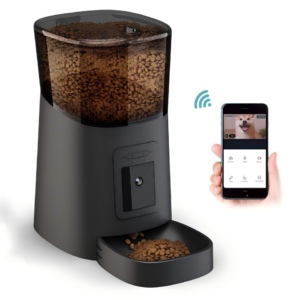
Recently, a smart pet feeder integrating IoT technology and scientific feeding concepts was officially launched, quickly becoming a focus of attention for urban pet-owning families and discerning pet owners. This device provides modern families with a stable, scientific, and interactive pet feeding solution through precise timed and quantitative food dispensing, remote management, and health monitoring. The feeder features an anti-jamming double-helix structure and a sealed, moisture-proof food storage compartment, ensuring accurate and stable food dispensing and maintaining the freshness of pet food for a long time. Through the accompanying mobile app, owners can set or modify multi-time feeding plans anytime, anywhere, and customize the portion size for each meal. The device has a built-in high-definition camera and a two-way voice module, supporting remote monitoring of the pet’s eating status and real-time interaction, effectively alleviating separation anxiety. “I no longer worry about my pet going hungry when I’m traveling for work or working overtime,” commented a Ragdoll cat owner who frequently travels for business. “I can see it eating on time on my phone, and occasionally when I call its name by voice, it looks up to find the source of the sound—this sense of involvement is very reassuring.” Besides the basic timed food dispensing, this product innovatively incorporates feeding data statistics and intelligent reminders. The system automatically records daily feeding times and portions, and promptly sends notifications to the owner when there are abnormal instances of undereating or overeating, providing a reference for early health monitoring. Some models also support multi-pet recognition feeding, using collar chips or AI image recognition technology to distribute specific meals to different pets, effectively solving the dietary management challenges of multi-pet households. Pet nutrition experts point out that regular eating habits are crucial for maintaining the health of a pet’s digestive system and controlling its weight. Traditional artificial feeding is easily affected by the owner’s schedule, while smart feeders help establish a stable feeding rhythm, especially suitable for pets that require strict control of calorie intake or have chronic diseases. “We’re not just making a ‘feeding machine,’ but we hope to build a closer emotional connection between people and pets through technology,” the product manager said in an interview. “The significance of smart feeding is that even when the owner isn’t around, care and attention can still be continuously and scientifically delivered.” Currently, the smart feeder has passed multiple certifications, including electrical safety and food-grade material contact certifications. It supports Wi-Fi/4G dual-mode networking, adapting to different home network environments. As the smart home ecosystem for pets gradually improves, products like this, which integrate precise feeding, remote companionship, and health management, are driving the evolution of pet ownership towards a more scientific, easier, and warmer approach.